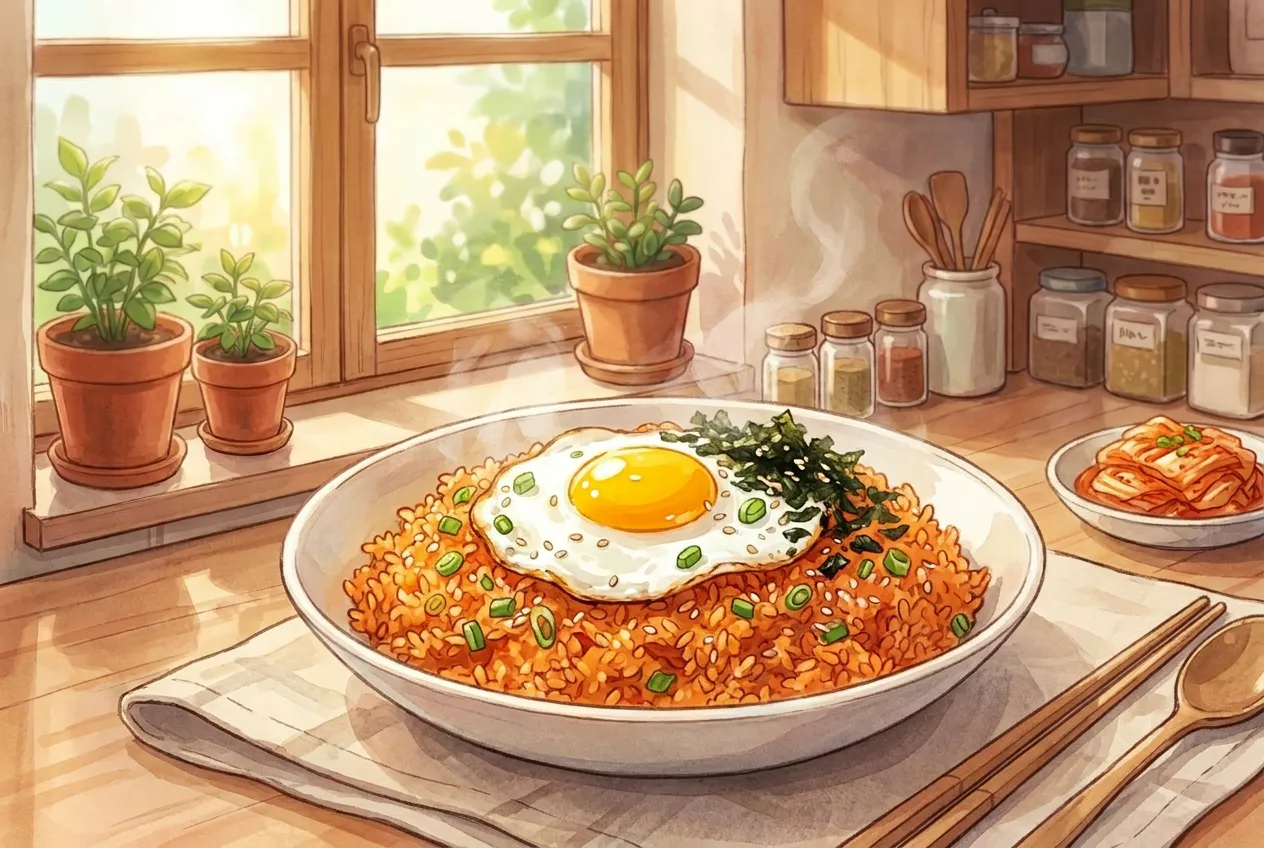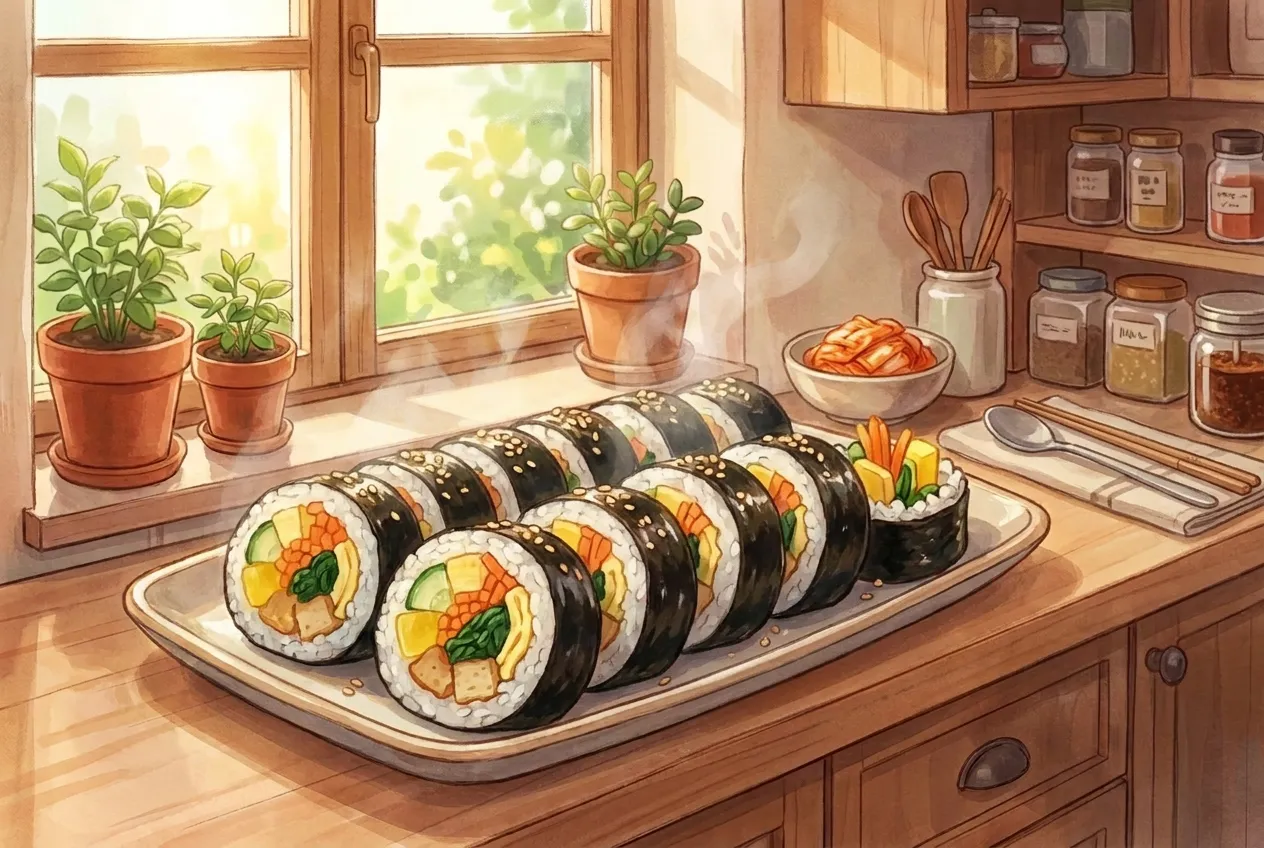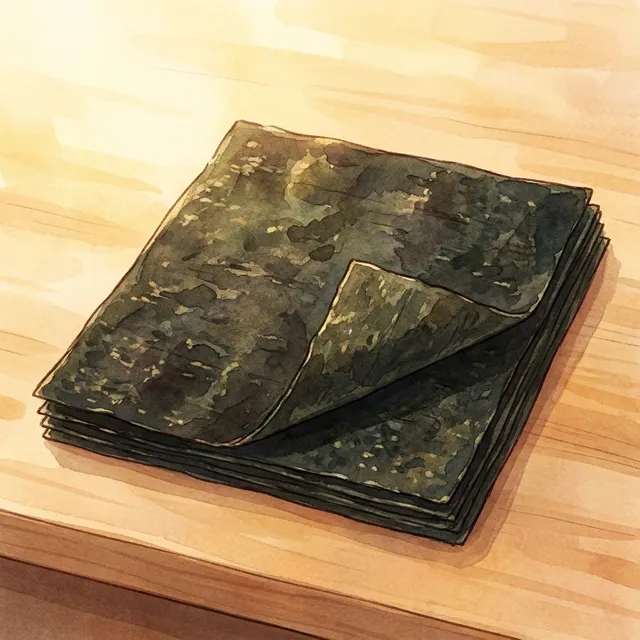
Plain sushi noriEasy to find
Same sheets (or crumbled)
Same seaweed — Korean gim is usually thinner, glossier and seasoned with oil and salt, so add a pinch of salt and a drop of sesame oil.
▼ seasoned

It's okay, you can make Korean food.
Ingredient guide
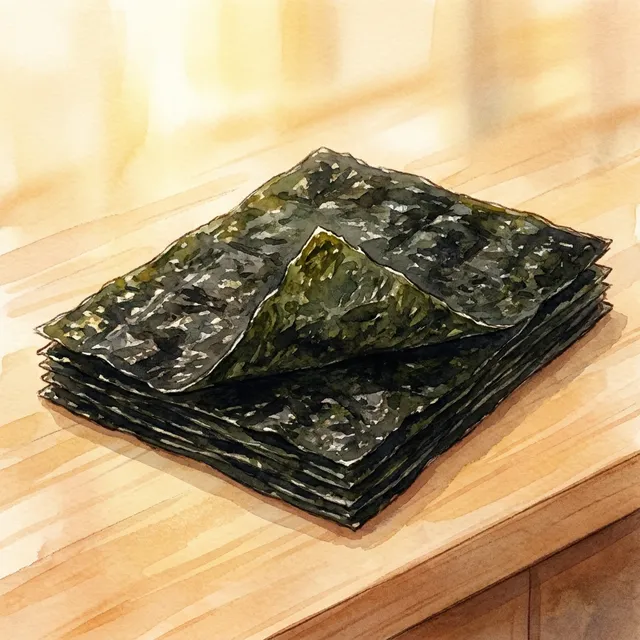
Roasted seaweed sheets. Korean gim is usually thinner than Japanese nori and is often brushed with sesame oil and lightly salted. It is eaten with rice, crumbled over dishes and rolled into gimbap.
Toasty and briny, lightly salty if seasoned.
For gimbap, buy sheets labeled gimbap gim (김밥용 김) or plain sushi nori. Seasoned snack gim is meant for eating with rice.
Keep airtight with a desiccant packet. Humidity makes it chewy; re-crisp it briefly in a dry pan.
Works in any country — look for these names, in these kinds of shops.
Honest swaps, with amounts per unit of the original and how the dish will change.
Same sheets (or crumbled)
Same seaweed — Korean gim is usually thinner, glossier and seasoned with oil and salt, so add a pinch of salt and a drop of sesame oil.
▼ seasoned

대파
Fresh and mildly sweet with a gentle onion bite that mellows when cooked.
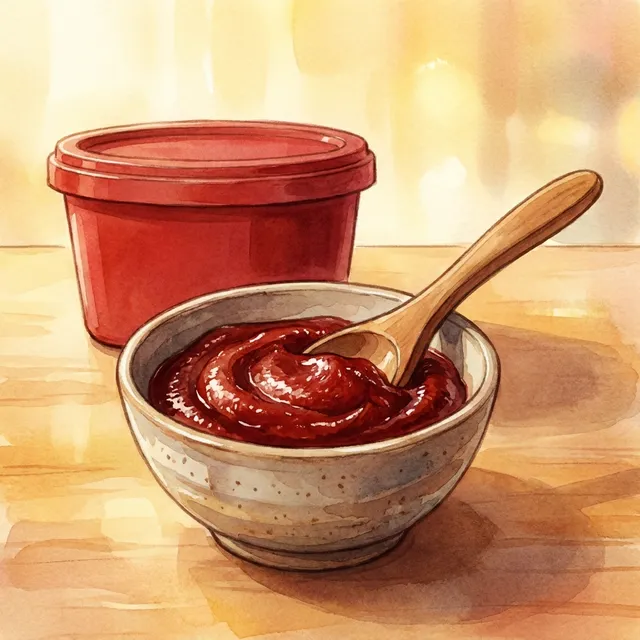
고추장
Spicy-sweet and savory with a fermented depth; the heat varies by brand.
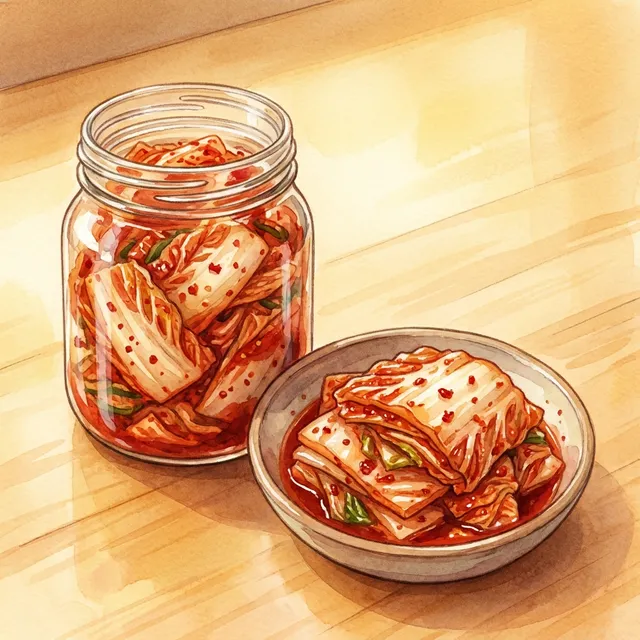
배추김치
Sour, salty, spicy and savory. It gets tangier the longer it ferments.
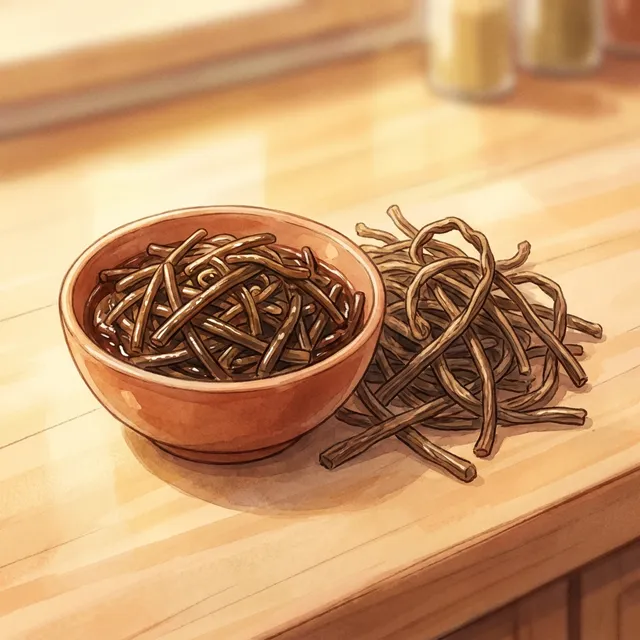
고사리
Earthy and subtle, with a chewy texture.